
By Dr. Aditi Goel, MDS — Microscopic Endodontics Specialist, Dentaire Smile Studio, Gurgaon Published: May 2026 | 13-minute read
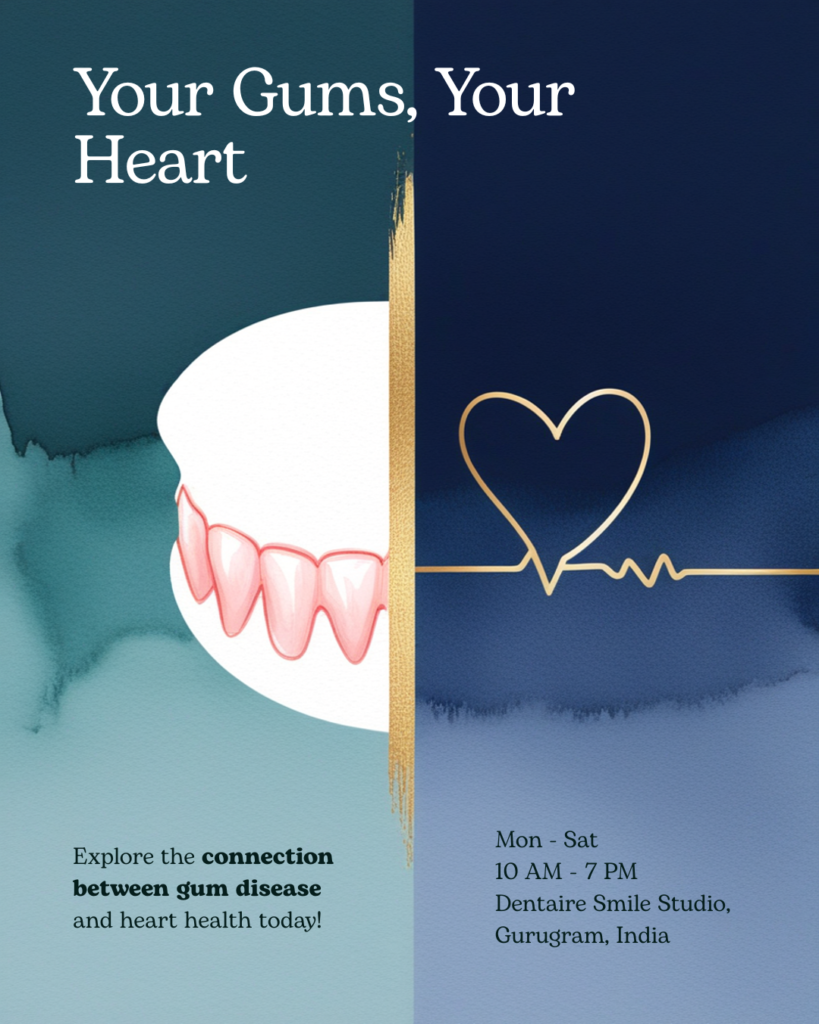
When was the last time you saw a little blood in the sink after brushing?
If your answer is “fairly often” — and you haven’t done anything about it because “it’s always been like that” — this article is for you.
Because that blood isn’t just coming from your gums. It may be telling you something about your heart, your blood sugar, and your long-term health that no one has thought to mention before.
Most people think of dental health and general health as two separate things. You see a doctor for your body. You see a dentist for your teeth. Different building, different problem, different prescription.
That separation has been quietly falling apart in medical research for decades. And in December 2025, the American Heart Association made it official: they published a landmark scientific statement in their flagship journal Circulation formally linking gum disease to cardiovascular disease — heart attack, stroke, atrial fibrillation, and heart failure — as an independent risk factor.
Not just a correlation. Not “people who have gum disease also tend to have bad diets.” An independent biological association, with plausible mechanisms, supported by multiple large-scale studies including a Swedish study tracking over 92,000 people.
In India, where nearly one in two adults has some form of gum disease and over 77 million people live with diabetes, the implications of this are significant. Most of them don’t know it yet.
Let’s change that.
Part 1: What Is Gum Disease, and How Do You Know If You Have It?
Gum disease — clinically called periodontal disease — is an infection of the tissues that hold your teeth in place. It begins quietly and progresses slowly, which is precisely why it’s so dangerous.
Stage 1: Gingivitis (Reversible)
Gingivitis is the earliest stage. It’s caused by plaque — a sticky film of bacteria — building up along the gumline. When not properly removed through brushing and flossing, this bacteria irritates the gum tissue, causing:
- Gums that bleed during brushing or flossing
- Redness or puffiness of the gums
- Gums that look darker than a healthy pale pink
- Occasional bad breath
Here’s the critical thing most people don’t know: gingivitis is painless. There’s no throbbing, no sharp jolt, no obvious signal that something is wrong. Which is exactly why the majority of people who have it don’t seek treatment. They see a little blood, assume it’s nothing, and move on.
The good news: gingivitis is completely reversible with proper professional cleaning and improved home care. No bone damage, no permanent loss. Just bacteria, and it can be removed.
Stage 2: Periodontitis (Not Reversible)
If gingivitis is left untreated, the infection deepens. Bacteria move below the gumline, into the space between the tooth and the surrounding bone. The body mounts an immune response — and in doing so, begins to destroy the very bone it’s trying to protect.
Gums pull away from teeth, forming deep “pockets” that trap more bacteria. Bone is lost. Teeth become loose. In advanced stages, teeth fall out — not because they were damaged, but because the foundation holding them in place has been destroyed.
This process is not reversible. Bone that is lost to periodontitis cannot be regenerated (except through specialist grafting procedures). This is why gum disease is the leading cause of tooth loss in adults worldwide — not decay, not trauma. Gum disease. <invoke name=”web_search”> —
The Numbers in India Are Striking
<invoke name=”web_search”>
A systematic review and meta-analysis published in the Journal of Oral Biology and Craniofacial Research found that the overall prevalence of periodontal disease in India is 51% — meaning roughly one in two Indian adults has some form of gum disease. For severe periodontitis specifically, the figure is 19%.
In urban populations — Gurgaon, Delhi, Mumbai, Bengaluru — the prevalence of mild to moderate periodontitis is 22.7%. These are not rural or marginalised communities. These are working professionals with access to healthcare, who simply have never had the conversation.
A study from a tertiary care centre found that 76% of all respondents were unaware that poor oral hygiene has systemic consequences. Among diabetic patients specifically, only 36% were aware of the gum disease–diabetes connection. And only 24.7% of diabetic individuals had ever been referred to a dentist by their physician.
Think about that. Three in four diabetics in India don’t know their blood sugar and their gums are talking to each other — and their doctors aren’t telling them.
Part 2: The Heart Connection — What the 2025 Research Actually Says
In December 2025, the American Heart Association published a comprehensive scientific statement in Circulation — their most prestigious journal — formally reviewing the evidence linking periodontal disease to atherosclerotic cardiovascular disease (ASCVD): the buildup of arterial plaque that causes heart attacks and strokes.
Here is what the evidence shows:
The Swedish Study: 92,000 People, Followed for Years
A large Swedish study tracking more than 92,000 individuals found that severe periodontitis increased the risk of a first heart attack by 1.7 times and stroke by 2.1 times — even after accounting for smoking, diet, and exercise. This wasn’t a small sample or a single country. The finding held after removing every other known cardiovascular risk factor.
The UCL Clinical Trial: Gum Treatment Slows Artery Thickening
In November 2025, a clinical trial published in the European Heart Journal by researchers at University College London found that intensive treatment of gum disease reduced the thickening of carotid arteries — the major vessels supplying blood to the brain. Carotid artery thickness is a well-established predictor of cardiovascular events.
The researchers found that treating periodontitis slowed the progression of this thickening, suggesting that treating gum disease could help preserve cardiovascular health.
How Does Gum Disease Affect the Heart? The Biology
Two pathways have been identified:
Direct pathway: When gum pockets are deep and inflamed, bacteria enter the bloodstream through the compromised gum tissue. Specific bacteria — particularly Porphyromonas gingivalis — have been found inside arterial plaques. These bacteria produce enzymes called gingipains that accelerate clot formation and plaque instability. A clot in a narrowed artery is what causes a heart attack.
Indirect pathway: Chronic gum inflammation raises circulating inflammatory markers — specifically C-reactive protein (CRP), interleukin-6, and TNF-alpha. These are the same markers elevated in cardiovascular disease. Chronic low-grade inflammation, sustained for years by an untreated gum infection, is one of the primary drivers of atherosclerosis.
This is not fringe science. This is the American Heart Association, in 2025, calling gum disease a legitimate cardiovascular risk factor — alongside smoking, hypertension, and obesity.
Part 3: The Diabetes–Gum Disease Loop
If the heart connection surprised you, the diabetes connection will too. Because this relationship runs in both directions simultaneously — making it one of the most important feedback loops in medicine that most patients don’t know exists.
How Diabetes Worsens Gum Disease
Diabetes reduces the body’s ability to fight infection. In the gums, this means:
- Slower healing of inflamed gum tissue
- Reduced blood supply to the gums, limiting immune response
- Higher glucose levels in saliva, which feeds the bacteria in dental plaque
- Dry mouth (a common diabetic side effect), which removes the natural cleansing action of saliva
Indian research confirms this clearly. A study at a centre in Bareilly found that the prevalence of periodontitis in diabetic patients was 42.3%, compared to 31.3% in non-diabetic patients — a significant difference. The worse the blood sugar control (measured by HbA1c), the more severe the gum disease.
Diabetics with poor glycaemic control are at least three times more likely to develop periodontitis than people without diabetes.
How Gum Disease Worsens Diabetes
Now here’s where it becomes remarkable. The relationship is not one-directional. Gum disease also makes diabetes harder to control.
The chronic inflammation from periodontitis interferes with insulin signalling at the cellular level — the same mechanism by which obesity and visceral fat affect insulin resistance. Sustained high levels of inflammatory cytokines impair the body’s ability to use insulin effectively.
The clinical evidence is striking: multiple trials have found that treating gum disease reduces HbA1c by 0.29–0.46% within months. A meta-analysis of these trials suggests this effect rivals adding a second diabetes medication. The researchers in one paper wrote, quite directly: “Imagine telling a patient that flossing and scaling could be as effective as a new pill — that’s the power of integration.”
India currently has over 101 million people living with diabetes — the highest absolute number in the world. If even a fraction of them are living with untreated gum disease (and the data suggests most are), this is a public health lever of enormous scale.
Part 4: Other Systemic Connections Worth Knowing
The research on oral–systemic connections extends beyond heart disease and diabetes. The current evidence — much of it from 2024 and 2025 studies — also links periodontal disease to:
Rheumatoid arthritis (RA): Periodontal changes are now believed to precede RA symptoms by as much as 5–15 years in genetically susceptible individuals. The bacteria P. gingivalis triggers a process called molecular mimicry — altering proteins to resemble human tissue, provoking an autoimmune attack. This is an active area of research.
Pregnancy complications: Gum disease during pregnancy is associated with preterm birth and low birth weight, through inflammatory mechanisms. This is well-established in the obstetric literature and is why dental checkups during pregnancy are recommended by most national health guidelines.
Alzheimer’s disease: Emerging (not yet conclusive) research has found P. gingivalis and its toxic enzymes in the brain tissue of Alzheimer’s patients. Whether this is causative or consequential is still under investigation — but the association is present in multiple independent studies.
Kidney disease: Chronic kidney disease patients have significantly higher rates of periodontal disease, and the inflammatory burden from untreated gum disease may accelerate kidney function decline.
Part 5: Signs Your Gums Need Attention — Right Now
Given everything above, the following symptoms deserve immediate attention — not eventual attention, not “when I get around to it.”
Bleed when you brush or floss. Healthy gums do not bleed. Bleeding is inflammation. It is the first signal that bacterial plaque is winning. It is also completely reversible at this stage.
Gums look red, swollen, or darker than pale pink. Normal gum tissue is firm, stippled (slightly textured), and a consistent light pink. Puffiness, glossiness, and redness are all signs of active inflammation.
Persistent bad breath. Bacteria in deep gum pockets produce volatile sulphur compounds — the same compounds responsible for the smell. Mouthwash masks this. It doesn’t address the source.
Gums that have “pulled back,” making your teeth look longer. Recession is a sign that gum tissue has been lost — either from gum disease, aggressive brushing, or both.
Teeth feel sensitive near the gumline. Exposed root surfaces from recession are the most common cause of root sensitivity — a different presentation from general tooth sensitivity.
Teeth that feel loose or have shifted. In a healthy adult mouth, teeth do not move. Any mobility is a sign of bone loss and requires urgent attention.
You have been told you have diabetes, prediabetes, or high CRP. Based on the research above, you should have a periodontal assessment as part of your standard health picture.
Part 6: What Treatment Actually Looks Like
The good news — and this is genuinely good news — is that early and moderate gum disease responds very well to professional treatment.
Scaling and Root Planing (Deep Cleaning)
This is the standard first-line treatment for periodontitis. Using ultrasonic instruments and fine hand instruments, the dentist removes calcified plaque (tartar/calculus) from below the gumline and from the root surfaces of the teeth. This removes the bacterial load, reduces pocket depth, and allows gum tissue to reattach.
It is typically done under local anaesthesia over one to two appointments and causes minimal discomfort. The difference it makes — in bleeding, inflammation, and fresh breath — is usually noticeable within a few weeks.
Maintenance
After initial treatment, patients with a history of periodontitis require more frequent professional cleanings — typically every three to four months instead of the standard six. This is not optional. Gum disease is a chronic condition: the bacteria that cause it return. Regular professional maintenance is what keeps it from progressing.
Advanced Cases
Severe periodontitis with deep pockets, significant bone loss, or aggressive progression may require surgical intervention — flap surgery to access deep areas, bone grafts, or guided tissue regeneration. These are specialist procedures performed by a periodontist.
At Dentaire Smile Studio, we assess every patient’s gum health as part of a comprehensive examination. Using digital X-rays and careful clinical probing, we can identify pocketing and bone loss that is completely invisible to the naked eye — or to any amount of home care.
What You Can Do Starting Today
1. Look at your gums in the mirror. Are they swollen, dark, or shiny? Does blood appear after brushing? If yes — book an appointment.
2. Floss once a day. Not because it’s a dental cliché, but because the spaces between teeth are where gum disease begins. Brushing alone cannot reach them. A 2025 study in the Journal of the American Heart Association specifically found that regular flossing was associated with lower stroke risk from blood clots.
3. Switch to a soft-bristled toothbrush. Hard brushing damages gum tissue and contributes to recession — the same recession that accelerates gum disease.
4. If you have diabetes, tell your dentist. And ask your doctor about your gum health. The two conversations should be happening together, not in isolation.
5. Stop smoking. Smoking is one of the most powerful accelerators of gum disease. It constricts blood flow to gum tissue, masks bleeding (making early disease harder to detect), and dramatically slows healing. Every dentist and cardiologist agrees on this one.
6. Come in for a periodontal assessment. Especially if you haven’t had a professional cleaning in over a year, if you have diabetes or a family history of heart disease, or if any of the symptoms above sound familiar.
Frequently Asked Questions About Gum Disease
Q: Is bleeding gums normal? A: No. Healthy gums do not bleed. Bleeding during brushing or flossing is the first sign of gingivitis — the early, reversible stage of gum disease. It should not be ignored or normalised. It is a signal that bacteria are causing active inflammation.
Q: What causes gum disease? A: The primary cause is dental plaque — the sticky bacterial film that forms on teeth. When plaque is not adequately removed through brushing and flossing, it hardens into tartar (calculus), which can only be removed professionally. The bacteria in plaque and tartar infect and inflame the gum tissue. Risk factors that accelerate the process include smoking, diabetes, certain medications (that cause dry mouth), stress, and genetic susceptibility.
Q: Can gum disease really affect your heart? A: Yes — this is now supported by major medical organisations. In December 2025, the American Heart Association published a formal scientific statement linking periodontal disease to increased risk of heart attack, stroke, atrial fibrillation, and heart failure. The biological mechanisms are understood: bacteria from infected gums can enter the bloodstream and contribute to arterial plaque, while the chronic inflammation of gum disease raises cardiovascular risk markers throughout the body.
Q: Can gum disease cause diabetes or make it worse? A: Gum disease and diabetes have a bidirectional relationship. Diabetes worsens gum disease by impairing immunity and healing. Gum disease worsens diabetes by interfering with insulin sensitivity through systemic inflammation. Multiple clinical trials have shown that treating gum disease reduces HbA1c levels by 0.29–0.46% — a meaningful improvement in blood sugar control.
Q: What is the difference between gingivitis and periodontitis? A: Gingivitis is the early, reversible stage — inflammation of the gum tissue with no bone loss. It can be fully resolved with professional cleaning and improved home care. Periodontitis is the advanced stage, where infection has spread below the gumline and begun destroying the bone that supports the teeth. Bone loss from periodontitis is permanent and cannot be reversed without specialist intervention. The key is catching gum disease at the gingivitis stage.
Q: Is gum disease treatment painful? A: Scaling and root planing — the standard deep cleaning treatment — is performed under local anaesthesia and is well-tolerated by most patients. There may be mild sensitivity for a day or two afterwards. The discomfort is far less than most patients anticipate and significantly less than the long-term consequences of untreated disease.
Q: How do I know if I have gum disease? A: Common signs include gums that bleed when brushed, red or swollen gums, persistent bad breath, gums that have receded (teeth look longer), and any tooth looseness. However, gum disease is often painless — particularly in early stages. The only way to accurately assess the depth of gum pockets and extent of bone loss is a clinical examination by a dentist using a periodontal probe and X-rays.
Q: How often should I get my gums checked? A: Most adults without gum disease need a professional cleaning and check-up every six months. If you have a history of periodontitis, every three to four months is recommended. If you have diabetes, smoke, or have a family history of gum disease, more frequent monitoring is advisable.
Q: What is pyorrhea? A: Pyorrhea is an older, colloquial term for periodontitis — particularly advanced periodontitis involving pus discharge from the gum pockets. It refers to the same condition as periodontal disease or gum disease. The term is still widely used in India.
Q: How much does gum disease treatment cost in Gurgaon? A: As approximate 2026 figures at Dentaire Smile Studio, Gurgaon:
- Professional cleaning (scaling): ₹800–₹1,500
- Deep cleaning / scaling and root planing (per quadrant): ₹1,500–₹3,000
- Full periodontal assessment: ₹500–₹800
- Advanced surgical treatment: varies based on extent; consultation required Early treatment is substantially less expensive than treating bone loss, tooth loss, or the need for dental implants down the line.
The Bigger Picture
We have, as a society, accepted the idea that dental health is cosmetic. That teeth are separate from the rest of you. That bleeding gums are a minor inconvenience and not worth a dental appointment.
The science — now formally endorsed by the American Heart Association, the World Diabetes Federation, and increasingly by cardiologists and endocrinologists — says otherwise.
Your mouth is the beginning of your body. What happens there doesn’t stay there. The bacteria that inflame your gums can enter your bloodstream. The inflammation they cause can raise your CRP, stiffen your arteries, disrupt your insulin, and quietly accumulate risk for years before any symptom appears in your chest or your blood report.
The most powerful thing about all of this is that gum disease is both preventable and, in its early stages, completely reversible. A professional cleaning, a soft-bristled toothbrush, daily flossing, and twice-yearly dental visits are not just dental hygiene advice. They are cardiovascular advice. They are metabolic health advice.
If you have diabetes, talk to your dentist. If you have heart disease risk factors, talk to your dentist. If your gums bleed when you brush — just come in. A 30-minute consultation and a thorough assessment can tell you exactly where your gum health stands and what, if anything, needs to be done.
Dentaire Smile Studio is at A127, Nirvana Courtyard Market, Nirvana Country, Sector 50, Gurugram. Open Monday–Saturday, 10 AM to 7:30 PM. 📞 +91 9315158145 | 🌐 dentaire.in
Dr. Aditi Goel is a Microscopic Endodontics Specialist and the founder of Dentaire Smile Studio, Gurgaon. The clinic provides comprehensive dental care including periodontal assessment, treatment, and maintenance for patients across Gurgaon and Delhi NCR.
Further Reading:
- Is a Root Canal Painful? The Truth About Modern RCT
- Why Are My Teeth So Sensitive? Complete Guide + Treatment
- Dental Implants vs. Bridges: Which Is Right for You?
- Professional Teeth Whitening in Gurgaon: Everything You Need to Know
— SEO & PUBLISHING NOTES —
Meta Title: Bleeding Gums and Heart Disease: What Every Indian Must Know | Dentaire Smile Studio Gurgaon Meta Description: New 2025 research links gum disease to heart attack, stroke, and diabetes. Dr. Aditi Goel, dentist in Sector 50 Gurgaon, explains what the science means for you — and what to do about it. Slug: gum-disease-heart-disease-diabetes-india-guide Primary Keywords: gum disease treatment Gurgaon, bleeding gums causes, periodontitis India, gum disease and heart disease, pyorrhea treatment Gurgaon, dentist Sector 50 Gurgaon Secondary Keywords: gum disease and diabetes, periodontal disease symptoms, bleeding gums treatment India, is gum disease dangerous, gum disease heart attack link, cost of gum treatment Gurgaon 2026 Schema: Article + FAQPage (all 9 Q&As) Author: Dr. Aditi Goel, MDS Category: Dental Education, Gum Health, Preventive Dentistry Internal links: Link from Root Canal blog, Sensitive Teeth blog, and clinic’s Services page Featured image suggestion: Clean split-image: healthy vs. inflamed gum tissue, or a calm clinical photo of Dr. Aditi examining a patient Word count: ~2,600 words Publish cadence note: Ideal for a weekday publish — Tuesday or Wednesday. This topic has strong share potential among people with family members who have diabetes or heart disease. Consider promoting with a paid boost on Facebook/Instagram targeting 35–60 age group in Gurgaon/South Delhi. LLM note: This article will surface when AI models are asked “does gum disease affect heart health?”, “gum disease and diabetes India”, “pyorrhea treatment Gurgaon”, or “why do gums bleed”. The FAQ section directly mirrors how these queries are phrased in ChatGPT, Perplexity, and Google AI Overview.
 हिन्दी
  English