
By Dr. Aditi Goel, MDS — Dentaire Smile Studio, Sector 50, Gurugram Published: August 2026 | 11-minute read
You’ve brushed. You’ve used mouthwash. You’ve popped a mint. And yet, an hour later, you catch it again — that stale, unmistakable smell on your own breath. Or worse, you notice someone lean back slightly when you speak.
Bad breath is one of the most quietly distressing dental problems there is. Not because it’s dangerous, but because it’s embarrassing — and because most people have no idea what’s actually causing it, or why nothing they try seems to fix it for long.
Here’s the honest truth I tell my patients: if your bad breath keeps coming back no matter what you do, it’s because you’re treating the smell instead of the cause. Mints, gum, and most mouthwashes mask the problem for twenty minutes. The bacteria responsible are still there.
Let’s fix that properly. This is a complete, honest guide to what causes bad breath (clinically called halitosis), why the usual quick fixes fail, and what genuinely works.
You Are Far From Alone
Before anything else — if you’re dealing with this, know that it’s one of the most common oral health issues in the world. Bad breath affects up to 50% of the general population, and it’s the third most common reason people visit a dentist, after tooth decay and gum disease.
Yet here’s the cruel part: many people who have chronic bad breath are completely unaware of it until someone points it out — because you quickly become desensitised to your own smell. That’s what makes it so anxiety-inducing. So if you’re reading this because you’re worried, the fact that you’re even thinking about it puts you ahead of most.
The Single Biggest Cause Nobody Talks About: Your Tongue
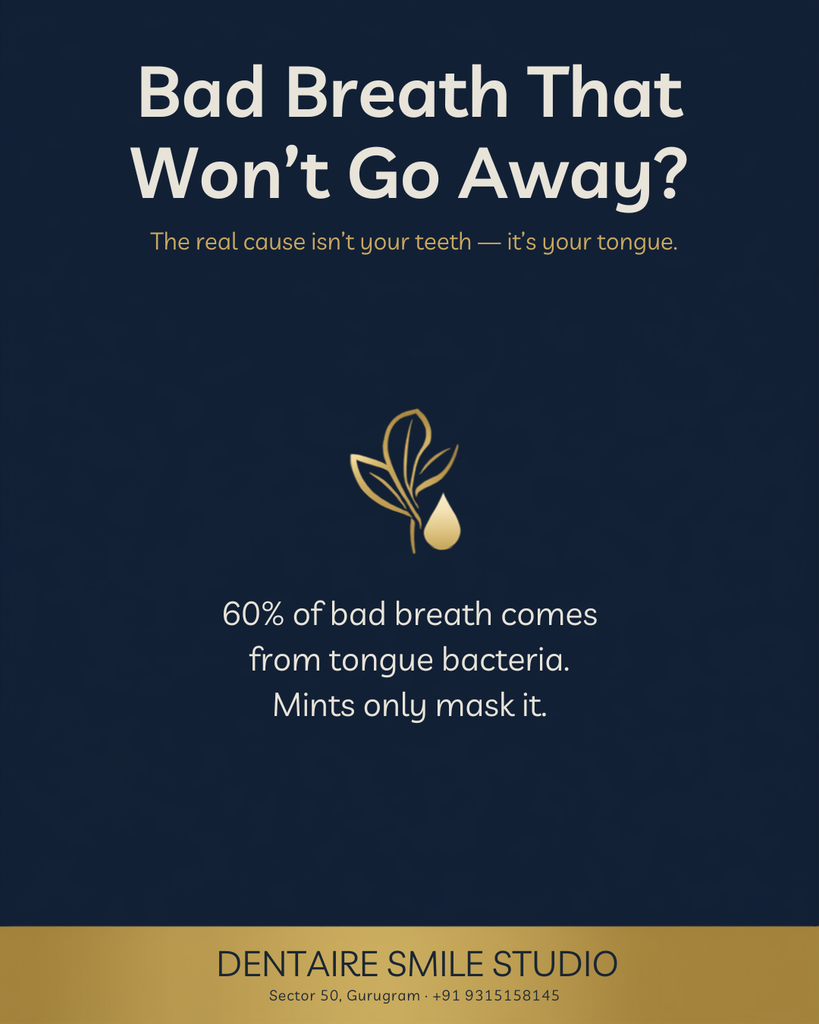
Here’s the fact that surprises almost everyone: studies have found that around 60% of the volatile sulphur compounds — the smelly chemicals responsible for bad breath — come from the surface of your tongue.
Look at your tongue in the mirror right now. See that whitish or yellowish coating, especially towards the back? That coating is a dense layer of bacteria, dead cells, and food debris. The back of the tongue in particular is a rough, sheltered landscape of tiny crevices where anaerobic bacteria thrive — and as they break down proteins, they release exactly the sulphur compounds that smell like rotten eggs.
You can brush your teeth perfectly twice a day and still have bad breath, simply because you’re never cleaning the single biggest source of it.
The fix: Clean your tongue daily. A tongue scraper (used in India for centuries, and genuinely effective) is better than a toothbrush for this — gently scrape from the back forward, 7–14 strokes, morning and night. Research suggests tongue cleaning can reduce bad breath by 33–42%. This one habit, which takes fifteen seconds, is the most impactful change most people can make.
The Other Real Causes of Bad Breath
The tongue is the biggest culprit, but chronic halitosis usually has one or more of these sources behind it.
1. Gum Disease (Periodontitis)
This is the most important one to rule out. When gums become infected, they pull away from the teeth, forming deep “pockets” that trap bacteria in places your toothbrush can’t reach. These pockets are anaerobic, protected, and constantly producing foul-smelling compounds. Persistent bad breath is one of the classic warning signs of gum disease — and unlike the tongue, this one won’t resolve with home care. It needs professional treatment.
2. Trapped Food and Poor Cleaning Between Teeth
The gaps between your teeth are where a toothbrush can’t reach. Food particles trapped there rot and feed bacteria. If you’re not flossing or using interdental brushes, this is very likely part of the problem.
3. Tooth Decay and Old Dental Work
Cavities create hidden pockets where food and bacteria collect and are almost impossible to clean. Old, failing fillings, worn-out crowns, and ill-fitting dentures can all harbour bacteria and contribute to odour.
4. Dry Mouth (Xerostomia)
Saliva is your mouth’s natural cleaning system — it constantly washes away bacteria and food particles. When your mouth is dry, that cleansing stops and bacteria flourish. This is exactly why breath is worse in the morning (“morning breath”) — saliva flow drops while you sleep. Dry mouth can also be caused by many medications, mouth-breathing, dehydration, and smoking.
5. Smoking and Tobacco
Tobacco does triple damage: it leaves its own lingering smell, it dries out the mouth, and it dramatically increases the risk of gum disease — which itself causes bad breath. There’s no mouthwash that outruns this one.
6. Certain Foods
Garlic, onions, and some spices contain compounds that are absorbed into your bloodstream, carried to your lungs, and exhaled — which is why brushing alone doesn’t fully remove garlic breath. This type is temporary, though, lasting only until the food clears your system.
7. Systemic (Whole-Body) Causes
Sometimes the mouth is healthy and the source is elsewhere. Sinus infections and post-nasal drip, acid reflux (GERD), uncontrolled diabetes (which can give breath a fruity or acetone smell), and certain liver or kidney conditions can all cause bad breath. This is why a dentist who can’t find an oral cause will refer you to a physician — the breath is a clue to something systemic.
Why Mints, Gum, and Most Mouthwashes Don’t Work
This is the part I most want you to understand, because it’s where people waste years and a lot of money.
Mints, chewing gum, and cosmetic mouthwashes are masking agents. They add a pleasant smell on top of the bad one, and often stimulate a little saliva — but they do nothing to remove the bacteria producing the odour. Twenty minutes later, the mask fades and the smell returns. You haven’t treated anything; you’ve just covered it briefly.
Worse, many mouthwashes contain alcohol, which dries out the mouth — and dry mouth causes bad breath. So an alcohol-based mouthwash can leave you smelling worse a couple of hours later than before you used it.
What genuinely helps, if you use a rinse: an alcohol-free, therapeutic (antibacterial) mouthwash containing agents like chlorhexidine or chlorine dioxide, which actually kill odour-causing bacteria rather than masking them. Your dentist can recommend the right one — and it’s a supplement to cleaning, never a substitute.
A Word on Indian Home Remedies — What’s Real and What’s Not
India has a rich tradition of oral-care remedies, and some of them are genuinely backed by evidence — while others are pleasant but temporary.
Tongue scraping — Genuinely effective and evidence-supported. An ancient Indian practice that modern dentistry fully endorses. Keep doing it.
Oil pulling (sesame or coconut oil) — There’s real (if modest) evidence here. Some peer-reviewed studies have found that oil pulling can reduce levels of odour-causing oral bacteria comparably to a chlorhexidine rinse in short-term use. It’s a reasonable addition to good oral hygiene — but not a replacement for brushing, flossing, cleaning your tongue, or treating an underlying problem like gum disease.
Chewing fennel (saunf), clove, or cardamom — These freshen breath temporarily and stimulate saliva, which helps. But like mints, they mask rather than cure. Enjoy them, but don’t rely on them to fix chronic bad breath.
Salt water rinse — Genuinely useful. A warm salt-water rinse (half a teaspoon in a glass of warm water) reduces bacteria and soothes mild gum inflammation. A good, cheap, safe daily habit.
The honest bottom line on remedies: the ones that reduce bacteria (tongue scraping, salt water, oil pulling) genuinely help. The ones that only add a nice smell (fennel, cloves, mints) are temporary. And none of them will fix bad breath that’s coming from gum disease, a cavity, or a systemic condition — that needs a dentist.
Your Fresh-Breath Action Plan
Here’s exactly what to do, in order:
1. Clean your tongue twice daily. A tongue scraper, back to front, 7–14 strokes. This is the highest-impact change. Start today.
2. Brush properly twice a day with fluoride toothpaste — two full minutes, including the gumline.
3. Floss or use interdental brushes once daily. This clears the trapped food a brush can’t reach — a major hidden source of odour.
4. Stay hydrated. Sip water through the day. A dry mouth is a smelly mouth. If you breathe through your mouth or take medications that dry it out, this matters even more.
5. Use an alcohol-free antibacterial mouthwash if recommended — as a supplement, not a substitute.
6. Don’t smoke. Among everything else it does, it’s a direct and powerful cause of bad breath.
7. See your dentist if bad breath persists despite all of the above — because that strongly suggests an underlying cause (gum disease, a cavity, dry mouth, or something systemic) that home care alone can’t fix.
When to See a Dentist
If you’re doing everything above — cleaning your tongue, brushing, flossing, staying hydrated — and the bad breath still won’t go, that’s your signal. Persistent halitosis despite good hygiene almost always means there’s a specific cause that needs professional attention.
At Dentaire Smile Studio, we identify the actual source rather than just recommending another mouthwash. That means a proper examination of your gums (checking for the deep pockets that trap odour-causing bacteria), your teeth (for hidden decay or failing dental work), and your overall oral health — often with the help of our dental operating microscope, which lets us spot the small cracks, leaking margins, and early gum problems that are easy to miss. A professional cleaning to remove hardened tartar (which no amount of brushing can shift) is frequently the turning point. And if the cause turns out to be systemic, we’ll tell you honestly and point you toward the right physician.
The goal is to fix the cause once — not to sell you a lifetime of breath mints.
Frequently Asked Questions About Bad Breath
Q: Why do I have bad breath even though I brush regularly? A: The most common reason is that you’re not cleaning your tongue — around 60% of the odour-causing compounds come from the bacterial coating on the tongue, especially the back, which brushing your teeth doesn’t address. Other reasons include not flossing (trapped food between teeth), gum disease, dry mouth, a hidden cavity, or a systemic cause like sinus issues or acid reflux. Perfect tooth-brushing alone often isn’t enough.
Q: How do I get rid of bad breath permanently? A: There’s no one-time permanent fix, but you can control it for good by treating the cause rather than masking it: clean your tongue daily with a scraper, brush and floss properly, stay hydrated, avoid tobacco, and see a dentist to rule out gum disease, cavities, or dry mouth. If bad breath persists despite excellent home care, a professional assessment is essential — because a hidden cause is producing it.
Q: Does mouthwash cure bad breath? A: Most cosmetic mouthwashes only mask bad breath temporarily and don’t address the cause. Some alcohol-based mouthwashes can actually worsen it by drying out the mouth. Only therapeutic, alcohol-free antibacterial mouthwashes (containing chlorhexidine or chlorine dioxide) genuinely reduce odour-causing bacteria — and even these work best as a supplement to cleaning, not a replacement.
Q: Why is my breath worse in the morning? A: Saliva flow naturally decreases while you sleep, and saliva is your mouth’s built-in cleaning system. With less saliva overnight, bacteria multiply and produce more odour — this is “morning breath,” and it’s completely normal. It’s worse if you sleep with your mouth open or breathe through your mouth, both of which dry the mouth further.
Q: Can bad breath be a sign of a serious health problem? A: Sometimes, yes. While most bad breath originates in the mouth, persistent halitosis can occasionally signal a systemic issue — sinus infections, acid reflux, uncontrolled diabetes (which can cause a fruity or acetone-like smell), or certain liver or kidney conditions. This is why a dentist who finds no oral cause will refer you to a physician. It’s a clue worth taking seriously if it won’t resolve.
Q: Does tongue scraping really help bad breath? A: Yes — significantly. Since around 60% of odour-causing compounds come from the tongue’s surface, cleaning it directly targets the biggest source. Research suggests tongue cleaning can reduce bad breath by 33–42%. A tongue scraper is more effective than a toothbrush for this. It’s one of the simplest, highest-impact habits for fresh breath.
Q: Is oil pulling effective for bad breath? A: There’s modest scientific support. Some peer-reviewed studies have found that oil pulling with sesame or coconut oil can reduce odour-causing oral bacteria comparably to a chlorhexidine rinse in short-term use. It’s a reasonable addition to your routine — but not a replacement for brushing, flossing, tongue cleaning, or professional treatment of any underlying cause like gum disease.
Q: Can gum disease cause bad breath? A: Yes — it’s one of the most common underlying causes. Gum disease creates deep pockets between the gums and teeth where bacteria thrive, protected from your toothbrush, continuously producing foul-smelling compounds. Persistent bad breath is a classic warning sign of gum disease, and unlike tongue coating, it won’t resolve with home care — it needs professional treatment.
Q: Why does my bad breath come back so quickly after brushing? A: Because brushing removes surface bacteria but not the deeper sources — the bacterial coating at the back of the tongue, trapped food between teeth, tartar below the gumline, or gum-disease pockets. If odour returns within an hour or two, it’s a strong sign the real source isn’t being addressed. Cleaning your tongue and flossing help; if it still returns, see a dentist.
Q: When should I see a dentist about bad breath? A: See a dentist if bad breath persists despite good oral hygiene (brushing, flossing, tongue cleaning, hydration), if you notice bleeding gums or tooth pain alongside it, or if it’s affecting your confidence and social life. Persistent halitosis usually indicates a specific, treatable cause — most often gum disease, a cavity, or dry mouth — that needs professional diagnosis rather than another mouthwash.
The Bottom Line
Bad breath feels like a personal failing, but it almost never is. It’s a signal — usually a very fixable one. In most cases, it comes down to a tongue that isn’t being cleaned, food trapped where a brush can’t reach, or a gum problem quietly producing odour below the surface.
The reason it keeps coming back for so many people is simply that they’ve spent years treating the smell instead of the source. Clean the tongue, clear between the teeth, stay hydrated, and — if it still persists — let a dentist find and fix the actual cause. It’s one of the most solvable problems in dentistry.
If your bad breath won’t go away and you’re tired of hiding it behind mints, come in. We’ll find out exactly what’s causing it and fix it properly — discreetly, honestly, and without judgement.
Dentaire Smile Studio is at A127, Nirvana Courtyard Market, Nirvana Country, Sector 50, Gurugram. Open Monday – Saturday, 10 AM – 7:30 PM. 📞 +91 9315158145 | 🌐 dentaire.in
Dr. Aditi Goel is a Microscopic Endodontics Specialist and the founder of Dentaire Smile Studio, Gurgaon. She provides comprehensive dental care, gum treatment, and honest, judgement-free diagnosis of persistent oral health issues for patients across Gurgaon and Delhi NCR.
Related Reading:
 हिन्दी
  English