
Kids’ dentistry · Sector 50, Gurugram
A child’s first dental visits shape how they feel about dentists for life. At Dentaire Smile Studio we keep those visits calm, unhurried and honest – for the child and for you – and we focus on preventing problems, not just treating them.
- First check-up by age one
- Fluoride varnish & sealants
- Fillings and milk-tooth root canals
- Gentle, no-rush appointments
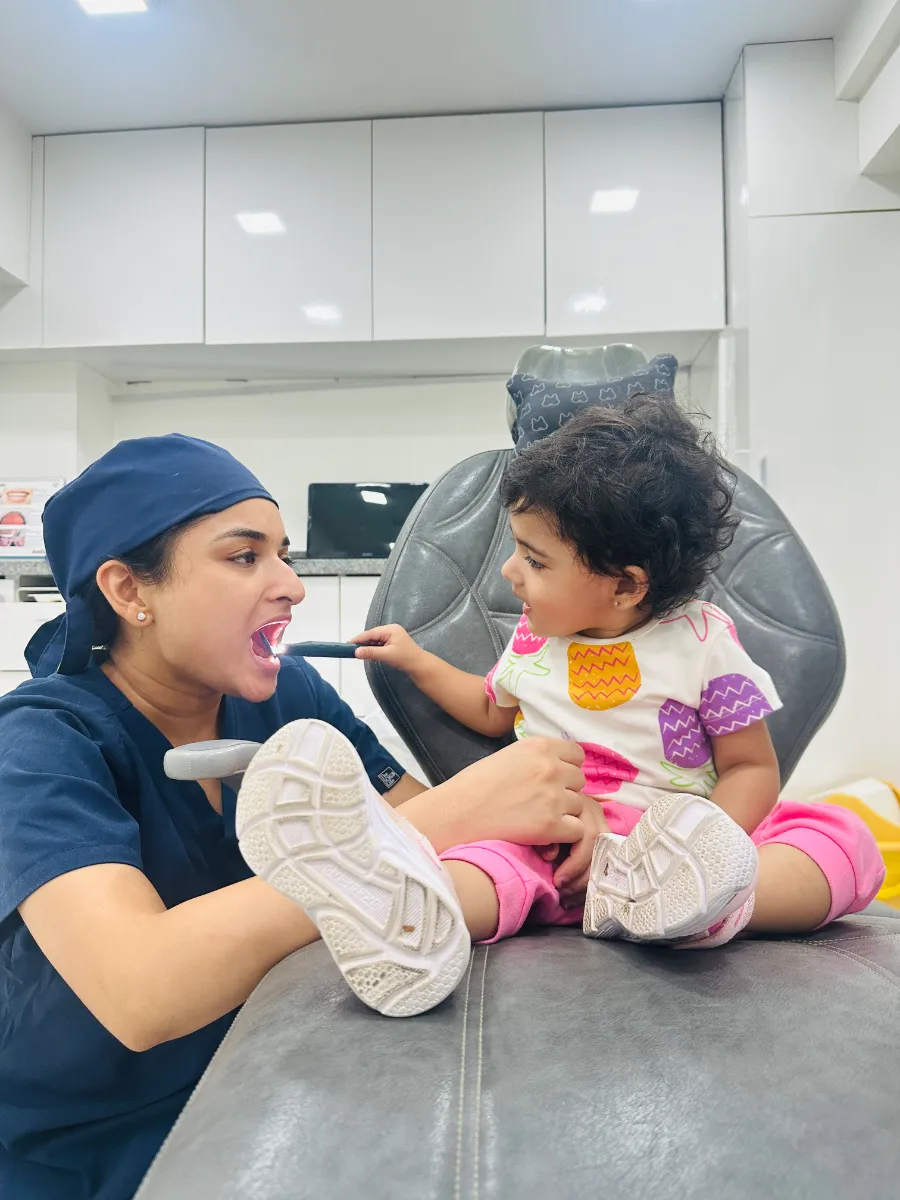
Quick answer: when should my child first see a dentist? By their first birthday, or within six months of the first tooth appearing – that is what paediatric dental associations recommend. After that, a check-up every six months is ideal. Early visits catch decay in milk teeth while it is small, and fluoride varnish applied at check-ups reduces decay in baby teeth by about a third. A routine check-up at Dentaire Smile Studio costs ₹500. Dentaire Smile Studio, Sector 50, Gurugram · updated October 2026.
Why milk teeth matter
“They’re only milk teeth, they’ll fall out anyway” is the most common thing I hear from parents – and it is the reason many children end up with pain, infections and early extractions. Milk teeth hold space for the adult teeth, help children chew and speak properly, and the back milk teeth stay in the mouth until about 10–12 years of age. A cavity in a milk tooth spreads faster than in an adult tooth because the enamel is thinner, and an untreated infection can affect the adult tooth forming underneath.
What we do for children
First visit and check-ups
A gentle look at teeth, gums and bite, often on a parent’s lap for toddlers, with advice on brushing, toothpaste and diet.
Fluoride varnish
A quick coating brushed onto the teeth that strengthens enamel. A Cochrane review found it reduces decay by about 37% in milk teeth and 43% in adult teeth.
Pit-and-fissure sealants
A thin protective coat on the grooves of back teeth, where most childhood cavities start – usually placed when the first adult molars come in around age six.
Tooth-coloured fillings
Small cavities are filled before they reach the nerve, often in a single short visit.
Milk-tooth root canals
Pulpotomy or pulpectomy saves an infected milk tooth so it can stay until the adult tooth is ready, instead of losing it early.
Habits and growth
Advice on thumb-sucking, mouth breathing and crowding, and timely referral for an orthodontic check by around age seven.
How we make visits easy for children
- Tell-show-do. We explain each instrument in simple words and show it before using it, so nothing is a surprise.
- Short first visits. The first appointment is mostly about getting comfortable – a ride in the chair, counting teeth, and a quick check.
- Parents stay with the child. Younger children can sit on your lap. You see and hear everything we do.
- No forced treatment. If a child is not ready, we stop, use preventive care to keep things stable, and try again at the next visit.
- Honest advice. If a milk tooth is about to fall out on its own, we will tell you – not every cavity in a wobbly tooth needs treatment.
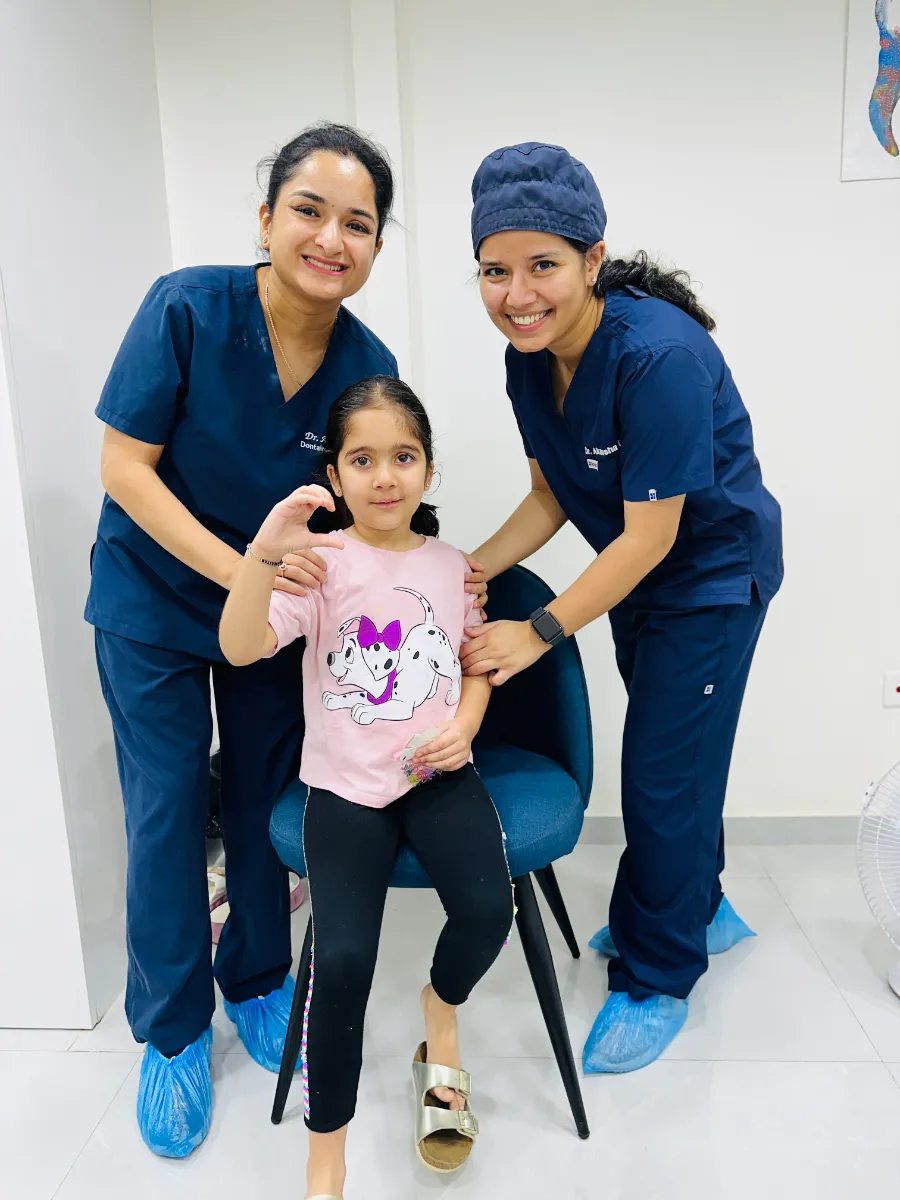
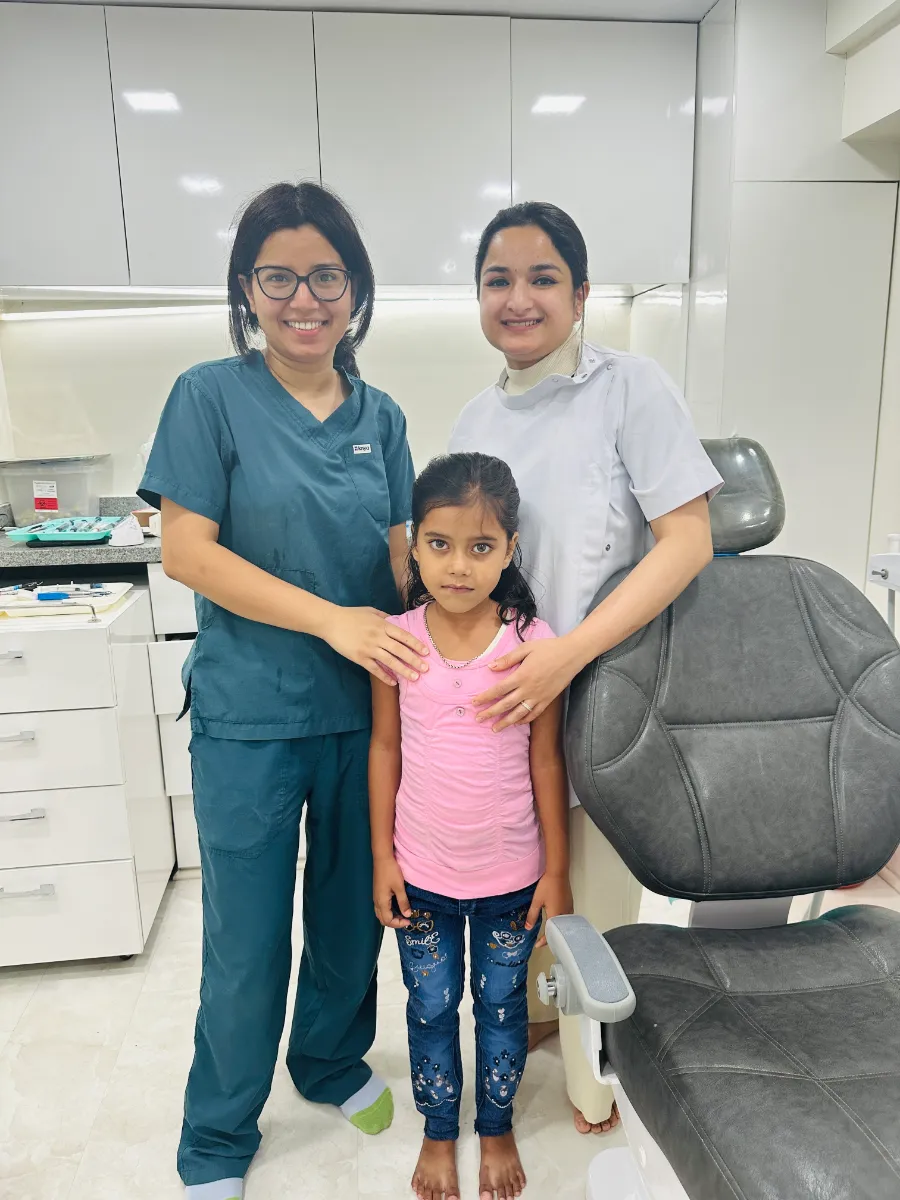
Tip for parents: please avoid saying “it won’t hurt” or using the dentist as a threat (“if you eat chocolate, the dentist will give you an injection”). Simply tell your child we will count and clean their teeth. Children take their cues from you.
Cavity prevention at home: what actually works
- Toothpaste with fluoride from the first tooth – a smear the size of a grain of rice until age three, then a pea-sized amount. Supervise brushing until about age seven or eight.
- No milk bottle or juice in bed. Milk or sweet drinks pooling around teeth overnight is the single biggest cause of early childhood decay.
- Watch how often, not just how much sugar. Frequent sips of juice and all-day snacking (biscuits, namkeen, sweets) cause more decay than one dessert after a meal.
- Floss once teeth touch, usually by age two to three for the back teeth.
- Six-monthly check-ups with fluoride varnish, so small problems are caught early.
Common problems we see in children
Early childhood caries (bottle caries)
Brown or black patches on the upper front milk teeth, often from night-time feeding. Caught early it can be stopped with fluoride and diet changes; later it needs fillings or crowns.
Toothache and abscess in milk teeth
Swelling on the gum or face, or a child refusing to chew on one side. These need prompt attention – call us the same day.
Injuries to front teeth
Falls in the park or at school are common. If an adult front tooth is knocked out, hold it by the crown (not the root), put it in milk and come to a dentist immediately.
Crowding and bite problems
Some crowding in mixed dentition is normal. An orthodontic check around age seven tells you whether early treatment is useful or whether it is better to wait.
Cost of children’s dental treatment
A routine check-up at Dentaire Smile Studio costs ₹500. The cost of fillings, sealants or milk-tooth root canals depends on the number of teeth and what each one needs, so we give you a written estimate after the examination – and we always tell you which treatments are urgent and which can wait.
Read more for parents
- Your child’s first dental visit: a Gurgaon parent’s guide
- Toothache at night: what to do right now
- Braces and clear aligners for teens
- Root canal treatment in Gurgaon
Kids’ dentistry FAQs
At what age should a child first visit the dentist?
By the first birthday, or within six months of the first tooth coming in. After that, a check-up every six months is recommended so decay in milk teeth is caught early.
Do cavities in milk teeth really need treatment?
Usually, yes. Milk teeth hold space for adult teeth and the back ones stay until about 10–12 years of age. Untreated cavities cause pain and infection and can affect the adult tooth underneath. A cavity in a tooth that is about to fall out on its own may only need monitoring.
Is fluoride safe for children?
Yes, in the right amounts. A rice-grain smear of fluoride toothpaste under age three and a pea-sized amount after that is safe and effective. Fluoride varnish applied by a dentist reduces decay in milk teeth by about a third.
What are dental sealants and does my child need them?
Sealants are thin protective coatings painted onto the grooves of back teeth, where most childhood cavities start. They are usually recommended when the first permanent molars come in at around six years of age, especially for children with deep grooves or previous cavities.
What is a root canal in a milk tooth?
A pulpotomy or pulpectomy removes the infected nerve tissue from a milk tooth and seals it, so the tooth can stay in place until the adult tooth is ready to come in. It is done under local anaesthesia and is usually completed in one visit.
My child is scared of the dentist. What can we do?
Book a short first visit just to get comfortable, avoid words like “pain” and “injection” at home, and stay with your child during the appointment. We use tell-show-do and never force treatment on a child who is not ready.
How much does a children’s dental check-up cost in Gurgaon?
A routine check-up at Dentaire Smile Studio, Sector 50, Gurugram costs ₹500. Any treatment needed is explained and estimated in writing after the examination.
When should my child see an orthodontist?
An orthodontic check at around age seven is recommended. Most children do not need treatment that early, but some bite and jaw problems are easier to correct while the child is still growing.
Book your child’s check-up in Sector 50, Gurugram
Dentaire Smile Studio, A127 Nirvana Courtyard Market, Nirvana Country, Sector 50, Gurugram · Monday to Saturday, 10 AM – 7:30 PM
 English
 हिन्दी