
Quick answer: Why does my wisdom tooth hurt, and does it need to come out? Wisdom tooth pain usually comes from a tooth that is partly erupted or impacted, which traps food and lets the gum around it become infected (pericoronitis). Warm salt-water rinses and an over-the-counter painkiller can ease pain for a day or two, but swelling, fever or trouble opening your mouth need a dentist promptly. Not every wisdom tooth needs removal; an X-ray (OPG) shows whether it can stay. In Gurgaon in 2026, removal typically costs about ₹2,000–₹4,000 for a simple extraction and ₹4,000–₹15,000 for a surgical one. Read when to remove and when to leave it. Dentaire Smile Studio, Sector 50, Gurugram · updated October 2026.
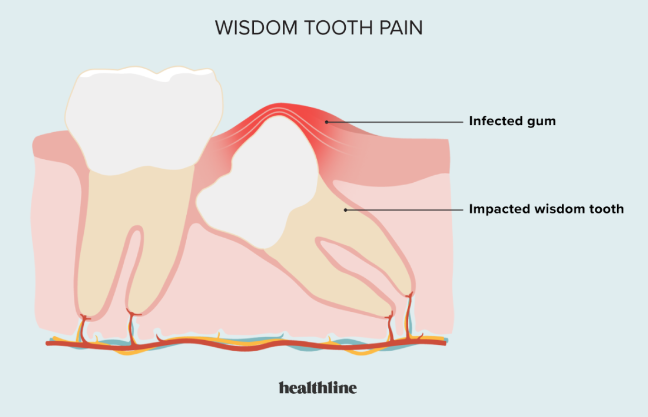
If your wisdom teeth are starting to cause pain it’s probably time to have them looked at. There are a few reasons why your wisdom teeth might be hurting you. The majority of those reasons indicate that wisdom teeth removal is needed (For wisdom tooth pain)
Most people have their wisdom teeth removed because they simply don’t have room to grow in without becoming impacted or shifting other teeth. No matter the reason, wisdom teeth rarely cause pain unless there is something wrong.
5 Causes of Wisdom Tooth Pain:
- Growing Pains: If your wisdom teeth are hurting, it could simply be them growing in. When they break through the gums it can cause pain, slight swelling and soreness.
- Cavity: Due to lack of space, wisdom teeth often grow in very close to neighboring teeth. This tight space is hard to clean making it a prime spot for cavities to form.
- Impacted Tooth: If a wisdom tooth becomes impacted it can cause swelling, pain when chewing or biting, pain in the jaw and difficulty opening your mouth.
- Cyst Development: When a wisdom tooth is impacted a cyst can form at the impacted tooth’s follicle causing pain (and damage) in the tooth and jawbone.
- Gum Disease: Gum disease is more likely to form on wisdom teeth because their location and lack of space make them harder to clean.
Wisdom Tooth and headache:
When wisdom teeth grow into a mouth that doesn’t have enough room for them, it can cause other teeth to shift, resulting in an improper bite. An improper bite can cause your lower jaw to compensate, and this may cause pain and soreness, including headaches. (wisdom tooth and headache)
Here are some ways to relieve pain from wisdom teeth:
Wisdom Teeth Removal: Having your wisdom teeth removed is the best way to fix any wisdom tooth related issues and prevent any future problems. However, if your wisdom teeth are already causing you pain, you’ll need to ease the pain naturally until your appointment.
Cold Compress/Ice: A cold compress or ice pack can help temporarily dull the ache in your jaw.
Ibuprofen/Aspirin: An anti-inflammatory, like ibuprofen or aspirin, will help control the pain. Just make sure you don’t take more than the recommended daily dosage.
Benzocaine: There are many different brands of mouth numbing gels made of benzocaine. You can use any benzocaine agent to dull the pain in your gums, even Baby Orajel.
Additional Articles
- No One is Coming: Why Self-Motivation Matters
- Avoiding Blind Spots in Patient Communication and Consent
- The Era of Concierge Dentistry
- Patient Retention: Building Relationships That Last
- Upcoming CE Webinar – The Prevention Mindset: A Practice-Wide Approach to Prevention
- Upcoming CE Webinar – Smarter Compliance for Office Managers: OSHA, Infection Control & HIPAA Hot Topics
- The Thankless Position: Start Acting Like It
- CE Webinar – What AI Can’t Do and Why It Will Never Replace a Dental Office Manager
- Upcoming CE Webinar – From Short-Staffed to Fully Booked: Hiring for Hygiene High-Performance
- AADOM Member Stories: Kiosa Paige
- Upcoming ASCA CE Webinar – Medical Billing for Dentistry is a Ladder NOT an Escalator!
- CE Webinar – Finish Strong. Lead Bold. The Office Manager’s Playbook for a Bigger, Better 2027
- Busy is Not Productive
- The Title Trap
- How to Hire the Best Employee for a Dental Office
- What Happens When Your Doctor Decides to Become a Full-Arch Master?
- The Platinum Rule: Elevating Communication in Dental Care
- Why Your Claims Aren’t Getting Paid (and How to Fix It)
- Culture Is the Key: Building a Dental Practice Where Teams Thrive and Patients Say Yes
- The Power of Institutional Knowledge in an AI-Driven Dental Practice
Home »
Read Dr. Aditi Goel’s detailed guides
→ Wisdom Tooth Pain in Gurgaon: When to Remove It, When to Leave It, and What It Actually Costs (2026)
→ Toothache at Night? What to Do Right Now — and When It’s an Emergency
 English
  हिन्दी