
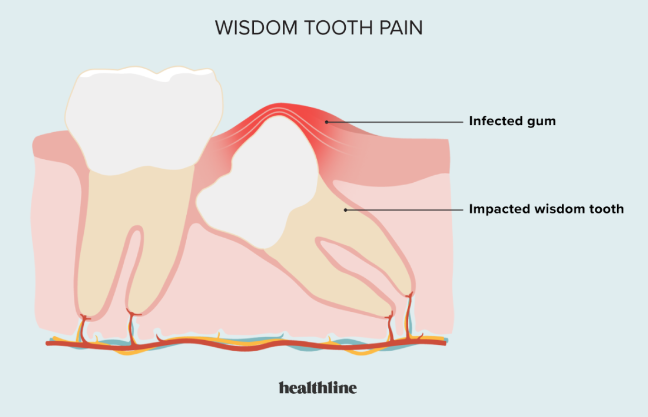
If your wisdom teeth are starting to cause pain it’s probably time to have them looked at. There are a few reasons why your wisdom teeth might be hurting you. The majority of those reasons indicate that wisdom teeth removal is needed (For wisdom tooth pain)
Most people have their wisdom teeth removed because they simply don’t have room to grow in without becoming impacted or shifting other teeth. No matter the reason, wisdom teeth rarely cause pain unless there is something wrong.
5 Causes of Wisdom Tooth Pain:
- Growing Pains: If your wisdom teeth are hurting, it could simply be them growing in. When they break through the gums it can cause pain, slight swelling and soreness.
- Cavity: Due to lack of space, wisdom teeth often grow in very close to neighboring teeth. This tight space is hard to clean making it a prime spot for cavities to form.
- Impacted Tooth: If a wisdom tooth becomes impacted it can cause swelling, pain when chewing or biting, pain in the jaw and difficulty opening your mouth.
- Cyst Development: When a wisdom tooth is impacted a cyst can form at the impacted tooth’s follicle causing pain (and damage) in the tooth and jawbone.
- Gum Disease: Gum disease is more likely to form on wisdom teeth because their location and lack of space make them harder to clean.
Wisdom Tooth and headache:
When wisdom teeth grow into a mouth that doesn’t have enough room for them, it can cause other teeth to shift, resulting in an improper bite. An improper bite can cause your lower jaw to compensate, and this may cause pain and soreness, including headaches. (wisdom tooth and headache)
Here are some ways to relieve pain from wisdom teeth:
Wisdom Teeth Removal: Having your wisdom teeth removed is the best way to fix any wisdom tooth related issues and prevent any future problems. However, if your wisdom teeth are already causing you pain, you’ll need to ease the pain naturally until your appointment.
Cold Compress/Ice: A cold compress or ice pack can help temporarily dull the ache in your jaw.
Ibuprofen/Aspirin: An anti-inflammatory, like ibuprofen or aspirin, will help control the pain. Just make sure you don’t take more than the recommended daily dosage.
Benzocaine: There are many different brands of mouth numbing gels made of benzocaine. You can use any benzocaine agent to dull the pain in your gums, even Baby Orajel.
Additional Articles
- From Chaos to Clarity: How Morning Huddles Improve Dental Practice Performance
- Why is This on My Desk?
- Schedule Surprises? How to Keep Your Dental Practice on Track
- How a Dental Therapy Dog Transforms the Patient Experience
- Multi-Practice Management from the Regional Manager’s Point of View
- AADOM DISTINCTIONcast – Beyond the Office: A Journey of Growth, Leadership, and Possibility
- CE Webinar – The 15-Minute Weekly Marketing Routine Your Competition Isn’t Doing
- Office Manager’s Playbook for Uninsured Patients: Turning Your Biggest Scheduling Gap into Recurring Revenue
- Do You Really Need a Dental Marketing Agency? A Decision Guide for Dental Office Managers
- AADOM Member Stories: Laura Nelson
- From Chairside to Leadership: My Journey from Dental Assistant to Office Manager
- The 10-Fold Return: Why Investing in Your Team is Your Most Profitable Decision
- Is Your Dentist Happy?
- Boss vs Leader: A Title Creates Authority. Character Creates Trust
- Leading Cybersecurity & HIPPA Compliance in the AI Era
- The Impact of Front Desk Tone on Dental Practice Culture
- What Difficult Conversations Taught Me About Becoming a Better Leader
- Building a Culture Where Appreciation Isn’t Occasional
- When Insurance Takes it Back: Navigating Dental Overpayment Recoupment
- Breaking the Front Office vs. Back Office Tug of War
Home »
 English
  हिन्दी