
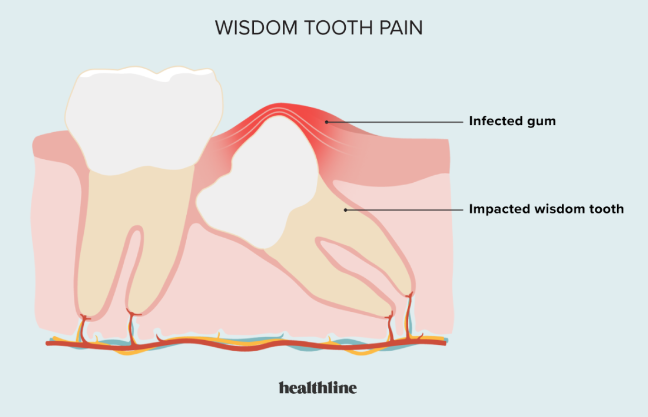
If your wisdom teeth are starting to cause pain it’s probably time to have them looked at. There are a few reasons why your wisdom teeth might be hurting you. The majority of those reasons indicate that wisdom teeth removal is needed (For wisdom tooth pain)
Most people have their wisdom teeth removed because they simply don’t have room to grow in without becoming impacted or shifting other teeth. No matter the reason, wisdom teeth rarely cause pain unless there is something wrong.
5 Causes of Wisdom Tooth Pain:
- Growing Pains: If your wisdom teeth are hurting, it could simply be them growing in. When they break through the gums it can cause pain, slight swelling and soreness.
- Cavity: Due to lack of space, wisdom teeth often grow in very close to neighboring teeth. This tight space is hard to clean making it a prime spot for cavities to form.
- Impacted Tooth: If a wisdom tooth becomes impacted it can cause swelling, pain when chewing or biting, pain in the jaw and difficulty opening your mouth.
- Cyst Development: When a wisdom tooth is impacted a cyst can form at the impacted tooth’s follicle causing pain (and damage) in the tooth and jawbone.
- Gum Disease: Gum disease is more likely to form on wisdom teeth because their location and lack of space make them harder to clean.
Wisdom Tooth and headache:
When wisdom teeth grow into a mouth that doesn’t have enough room for them, it can cause other teeth to shift, resulting in an improper bite. An improper bite can cause your lower jaw to compensate, and this may cause pain and soreness, including headaches. (wisdom tooth and headache)
Here are some ways to relieve pain from wisdom teeth:
Wisdom Teeth Removal: Having your wisdom teeth removed is the best way to fix any wisdom tooth related issues and prevent any future problems. However, if your wisdom teeth are already causing you pain, you’ll need to ease the pain naturally until your appointment.
Cold Compress/Ice: A cold compress or ice pack can help temporarily dull the ache in your jaw.
Ibuprofen/Aspirin: An anti-inflammatory, like ibuprofen or aspirin, will help control the pain. Just make sure you don’t take more than the recommended daily dosage.
Benzocaine: There are many different brands of mouth numbing gels made of benzocaine. You can use any benzocaine agent to dull the pain in your gums, even Baby Orajel.
Additional Articles
- How to Make Your Dental Office the Spot People Actually Want to Visit
- Level Up Your Career: Strategies for Success
- Your First Conference? Here’s What You Need to Know
- I’m an Office Manager, Not a Project Manager! – 3 Tips to Get Your Practice Through a Renovation Successfully & What I Learned Along the Way
- 8 Key Steps to Maximize Your Collection Rate
- Choosing New Vendors for Your Dental Practice
- Upcoming CE Webinar – Schedule Optimization: How We Outpace Your Office
- Effective Delegation: Maximizing the Skills of Your Dental Team
- Respectfully Assertive: The Leadership Skill Every Dental Manager Needs
- Creating a Positive Workplace: Tips for Success
- Upcoming CE Webinar – The 2026 Billing Game Plan for Office Managers
- Upcoming AADOM DISTINCTIONcast – How do I Stay Organized in All This Chaos? The Recipe for Organizational Success
- What I’m doing about my 8-year-old granddaughter’s cavity
- AADOM PODcast – When AI Sounds Confident but Gets HR Completely Wrong
- Upcoming AADOM Regional Meeting – Stamford, CT
- Upcoming AADOM Regional Meeting – Newport Beach, CA
- Is a 70 degree bedroom ruining your sleep?
- Pediatric Dental Sedation: In-Office Sedation vs. Going to the Operating Room (OR)
- Off the Clock: Reclaiming Your Commute Home for Personal Peace
- The Role of a Treatment Coordinator in a Dental Practice
 English
  हिन्दी